Skulptur Projekte Münster in numbers
The organiser-confirmed period for the sixth exhibition.
Skulptur Projekte Münster: official 2027 exhibitionThe exhibition began in 1977 and returns to Münster on a decennial cycle.
Skulptur Projekte Münster: official 2027 exhibitionThe sixth edition marks fifty years since the founding exhibition.
Skulptur Projekte Münster: official 2027 exhibitionAround 650,000 visitors from 72 countries in 2017, for 35 projects. 2027 has around thirty artists, under the artistic direction of WHW.
LWL: 2017 attendanceOfficial sources: 2027 artists and locations · About and visiting · Skulptur Projekte Münster: official 2027 exhibition · Skulptur Projekte archive: Giant Pool Balls, 1977
What is Skulptur Projekte Münster?
Skulptur Projekte Münster is an international exhibition of contemporary art in the public spaces of Münster, a university city in north-west Germany. It happens only once every ten years, and has done since it was founded in 1977 by Klaus Bußmann and Kasper König. Instead of a gallery, artists make new work for streets, parks, squares, buildings and neighbourhoods around the city, and some of those works stay behind for good.
The last edition ran from 10 June to 1 October 2017, with 35 artistic projects ranging from sculpture to performance. The organiser reported around 650,000 visitors from 72 countries, a remarkable number for an exhibition that comes round only once a decade.
What is new for 2027?
The sixth edition runs from 13 June to 3 October 2027 and marks the exhibition's 50th anniversary. Its artistic direction is the Zagreb-based curatorial collective What, How & for Whom (WHW). The organiser says around thirty artists will take part, with more names revealed in the month before the opening. The first five have been announced:
- Iza Tarasewicz at Gut Kinderhaus, a former farm where people with disabilities live and work, exploring seasonal cycles and agriculture.
- Hew Locke in the Haus der Niederlande at the Krameramtshaus, the 1589 merchants' guild building tied to the peace talks before the Peace of Westphalia.
- Selma Selman at the former Hörster Friedhof, using discarded scrap to tell stories of labour and family history.
- Róza El-Hassan in the Botanical Garden in the Schlossgarten and in the district of Berg Fidel, on migration and mutual support.
- Oscar Murillo in the former Officers' Casino of the York-Quartier, an ex-barracks being redeveloped as housing, on shared and communal eating.
Alongside the centre, 2027 puts a particular focus on neighbourhoods in transformation: Kinderhaus, Berg Fidel and the York-Quartier.
How is it organised?
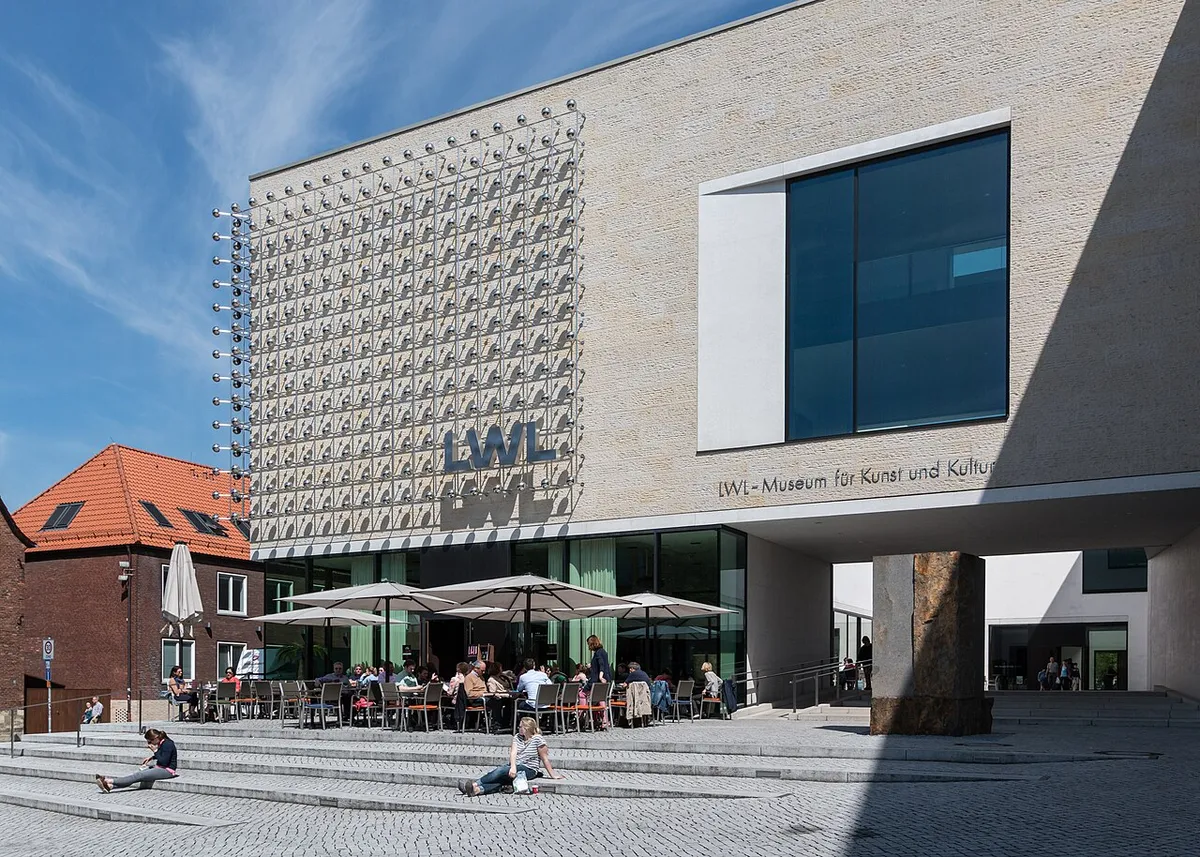
The exhibition is organised by the LWL-Museum für Kunst und Kultur and supported by the regional association LWL and the City of Münster. There are no sectors, booths or galleries: each artist makes a project for a particular place, and the exhibition is the whole city.
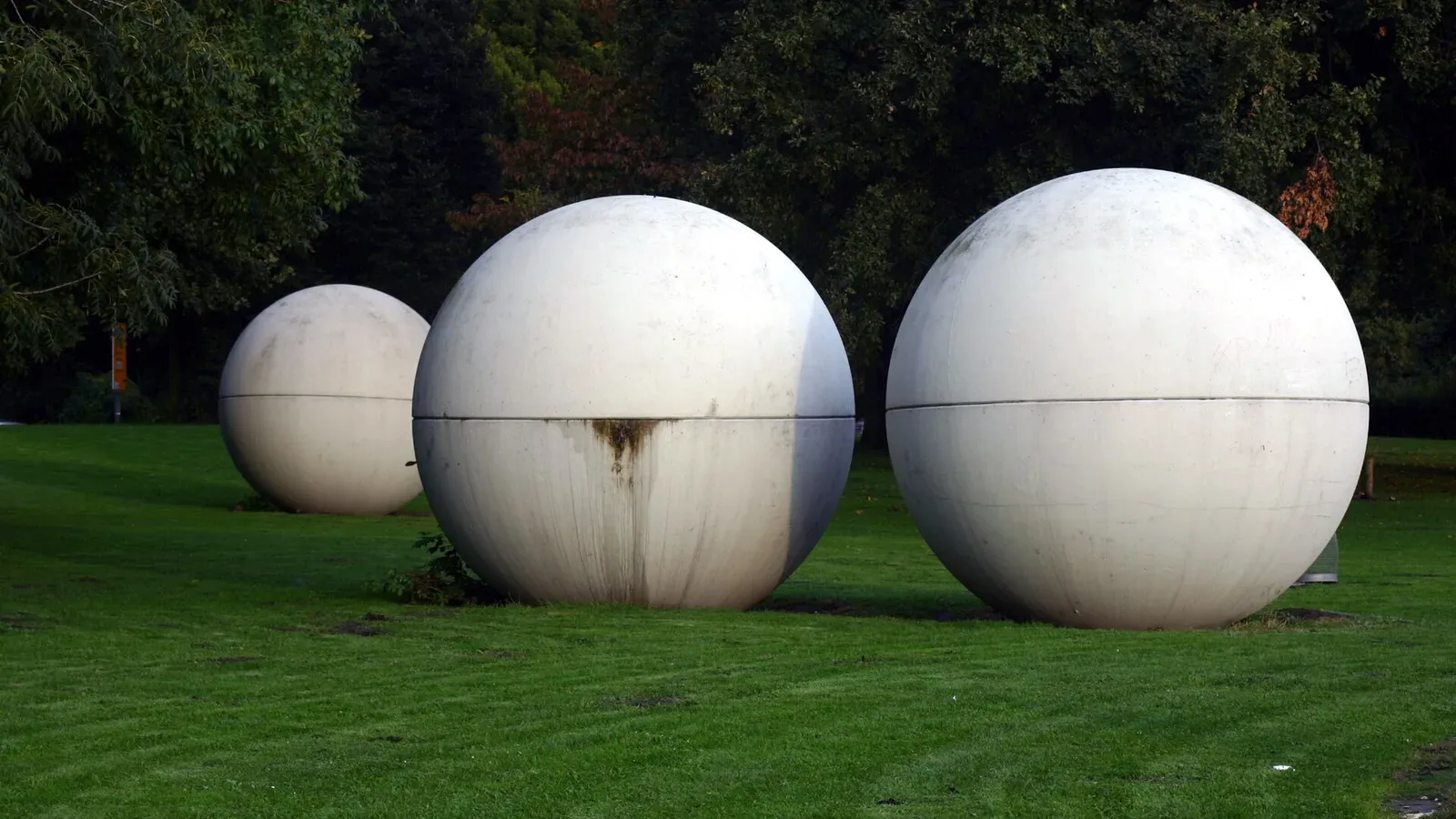
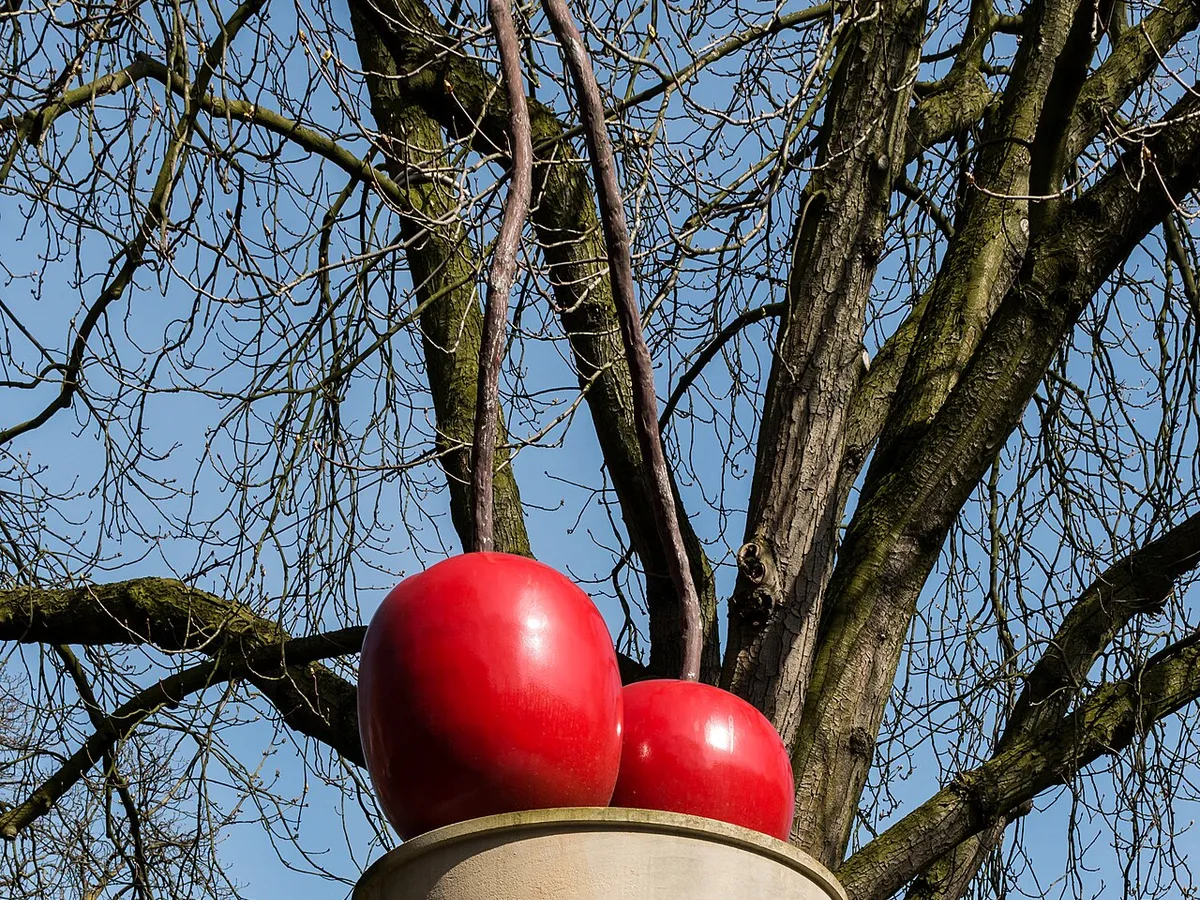
Two layers overlap. The new 2027 projects appear for the exhibition period. The public collection is made up of around 45 works from earlier editions that have stayed in Münster, such as Claes Oldenburg's Giant Pool Balls from 1977 beside the Aasee lake and Thomas Schütte's cherry column from 1987. You can see those any time, not just in 2027.
One famous work will not be back in time: the organiser says Bruce Nauman's Square Depression is due to be rebuilt in 2028/29.
When is it, and what are the hours?
| Date | What happens |
|---|---|
| Friday 11 June 2027 | Press conference and press preview |
| Saturday 12 June 2027 | Preview for professional visitors; official opening in the evening |
| Sunday 13 June 2027 | Exhibition opens to the public |
| 13 June to 3 October 2027 | Exhibition period |
The dates come from the organiser's visitor page. Opening hours for indoor sites had not been published; outdoor works are usually viewable whenever the public space they occupy is open.
Where is it held?
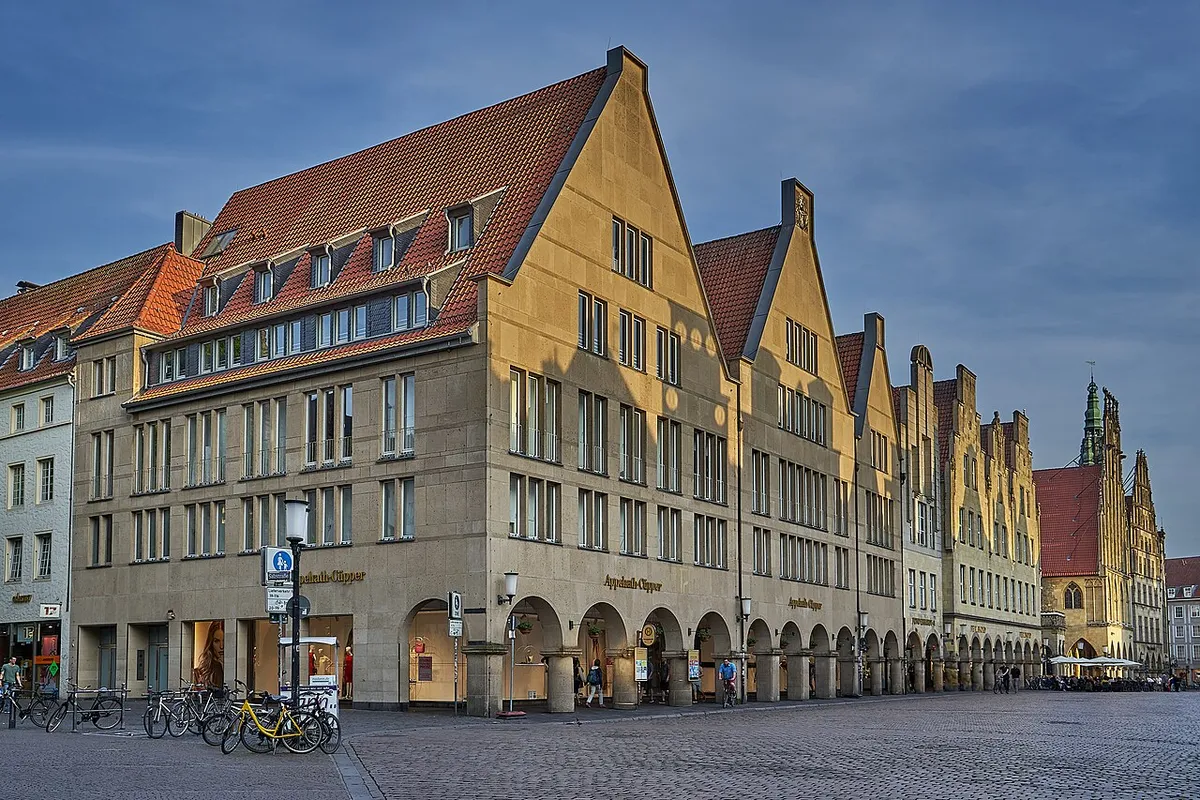
Across Münster. The new projects are spread from the historic centre, around the Prinzipalmarkt, Domplatz and the Schlossgarten, out to Kinderhaus in the north, Berg Fidel in the south and the York-Quartier in the south-east. The organising museum is at Domplatz 10, a useful starting point, but not the address of every project. A full map will be published closer to the opening.
The nearest airport is Münster/Osnabrück (FMO), which describes itself as 25 km north of Münster.
How do tickets work?
Seeing the artworks is free. The City of Münster names free access to the works as one of the exhibition's defining features, and there is no general admission ticket.
What you book is the mediation programme: group tours and a programme for individual visitors, with booking opening in spring 2027. Prices had not been published. Contact the visitor service at besuch@skulptur-projekte.de. The press and professional previews on 11 and 12 June are restricted to those audiences.
How do I get there and get around?
From Münster/Osnabrück Airport, the S50 express bus and the R51 run to Münster Hauptbahnhof. The main station is right in the city centre, with IC, EC and ICE connections across Germany.
Münster is famous as a cycling city. The tourism office recommends exploring the old town on foot and renting a bike for further afield, and the münster:mobil app plans journeys by bus and train. With 2027 projects out in Kinderhaus, Berg Fidel and the York-Quartier, a bike or bus will save a lot of walking.
Where can I park, and where should I stay?
No exhibition parking has been announced. In the centre, the Parkhaus Aegidiimarkt at Aegidiimarkt 1–7 has 780 spaces and a 1.90 m height limit, at €3 for the first hour, €2.50 for each further hour and €20 a day. The museum lists accessible parking on Domplatz and in that garage. With most projects reachable by bike or bus, a car is rarely needed once you arrive.
Staying in or near the old town puts most of the central projects within walking distance, and the main station area is convenient for trains and airport buses. Münster is busy all summer, and with documenta in Kassel running at the same time, art travellers may combine the two, so book early.
What can I bring, and what should I wear?
No exhibition-wide rules on bags, photography or dress have been published, and most works are outdoors. Practical advice, not an official rule: wear comfortable shoes, bring a rain jacket, since Münster's weather changes quickly, and carry water if you are cycling between districts. Individual indoor sites may set their own rules.
Children, service animals and accessibility
The exhibition is free for everyone, so children need no tickets for the artworks. At the organising museum, admission is free for under-18s, both entrances are accessible, wheelchairs can be borrowed free, there are accessible toilets on every floor, and assistance dogs are allowed.
Those are the museum's arrangements; access at each 2027 project, especially outdoor sites and older buildings, had not been published. Visitors who need step-free routes should contact the visitor service before planning a route.
Who goes, and what do first-timers get wrong?
In 2017 visitors came from 72 countries, from the international art world to day-trippers. The exhibition also sets out to reach Münster residents and people who are not regular museum and gallery visitors, which is why many projects are in ordinary neighbourhoods.
First-timers often mix up the permanent works from earlier editions with the new 2027 projects, underestimate how far apart the outer districts are, assume indoor sites are open around the clock because the outdoor works are, and plan around Nauman's Square Depression, which will not be ready. Pick up a map, rent a bike, and give yourself at least two days.
Skulptur Projekte Münster: frequently asked questions
When is Skulptur Projekte Münster 2027?
The organiser confirms 13 June to 3 October 2027 for the sixth edition. The exhibition places contemporary art in Münster’s public spaces and marks fifty years since its founding in 1977. Check the final project map and any individual location hours before planning a short visit around particular works.
Skulptur Projekte Münster: official 2027 exhibitionHow often does Skulptur Projekte Münster take place?
Every ten years. The first exhibition was in 1977, and the 2027 edition is the sixth, marking its fiftieth anniversary. Some works from earlier exhibitions remain in Münster, so distinguish a permanent historical work from a new commission when following a map or reading about the current programme.
Skulptur Projekte Münster: official 2027 exhibitionWho curates Skulptur Projekte Münster 2027?
The artistic direction is by the curatorial collective What, How & for Whom / WHW. The exhibition is organised by the LWL-Museum für Kunst und Kultur and hosted by LWL and the City of Münster. Use the official programme for the final artists and projects rather than assuming a previous edition’s list.
Skulptur Projekte Münster: official 2027 exhibitionDo you need tickets for Skulptur Projekte Münster?
No ticket is needed to see the artworks: the City of Münster names free access to the works as a defining feature of the exhibition. What you can book, from spring 2027, are group tours and a programme for individual visitors, through the visitor service at besuch@skulptur-projekte.de. Tour prices have not been published.
Skulptur Projekte: about and visitingCan you combine Skulptur Projekte with documenta in 2027?
Both exhibitions have confirmed 2027 programmes, but they are in different cities and are organised separately. Skulptur Projekte is in Münster; documenta is in Kassel. Compare the two official calendars and allow for the journey between them instead of treating one exhibition’s dates or access as covering the other.
Skulptur Projekte Münster: official 2027 exhibitionAre the Giant Pool Balls part of the 2027 exhibition?
Giant Pool Balls is a work from the first Skulptur Projekte in 1977, preserved in Münster and documented in the official archive. Its photograph here illustrates the exhibition’s history. It is not presented as a new 2027 commission; use the forthcoming project list to identify work made for the sixth edition.
Skulptur Projekte archive: Giant Pool Balls, 1977Grand Circle does not organise Skulptur Projekte Münster 2027 and sells no tickets or hospitality for it. It is run by LWL-Museum für Kunst und Kultur. Dates and prices are set by the organiser and change without notice. This entry was last checked against its sources on 2026-10-16. If something here is wrong, tell us and it gets fixed rather than aged.